Executable
A governance judgment must affect the next step, not only produce prose.
 Autoloom
Governance Engineering for Coding Agents
Weave goals, constraints, engineering methods, action judgments, and verification evidence into agent execution.
Judge before acting, change the next step during execution, and retain reviewable facts and unknowns at delivery.
Download for Windows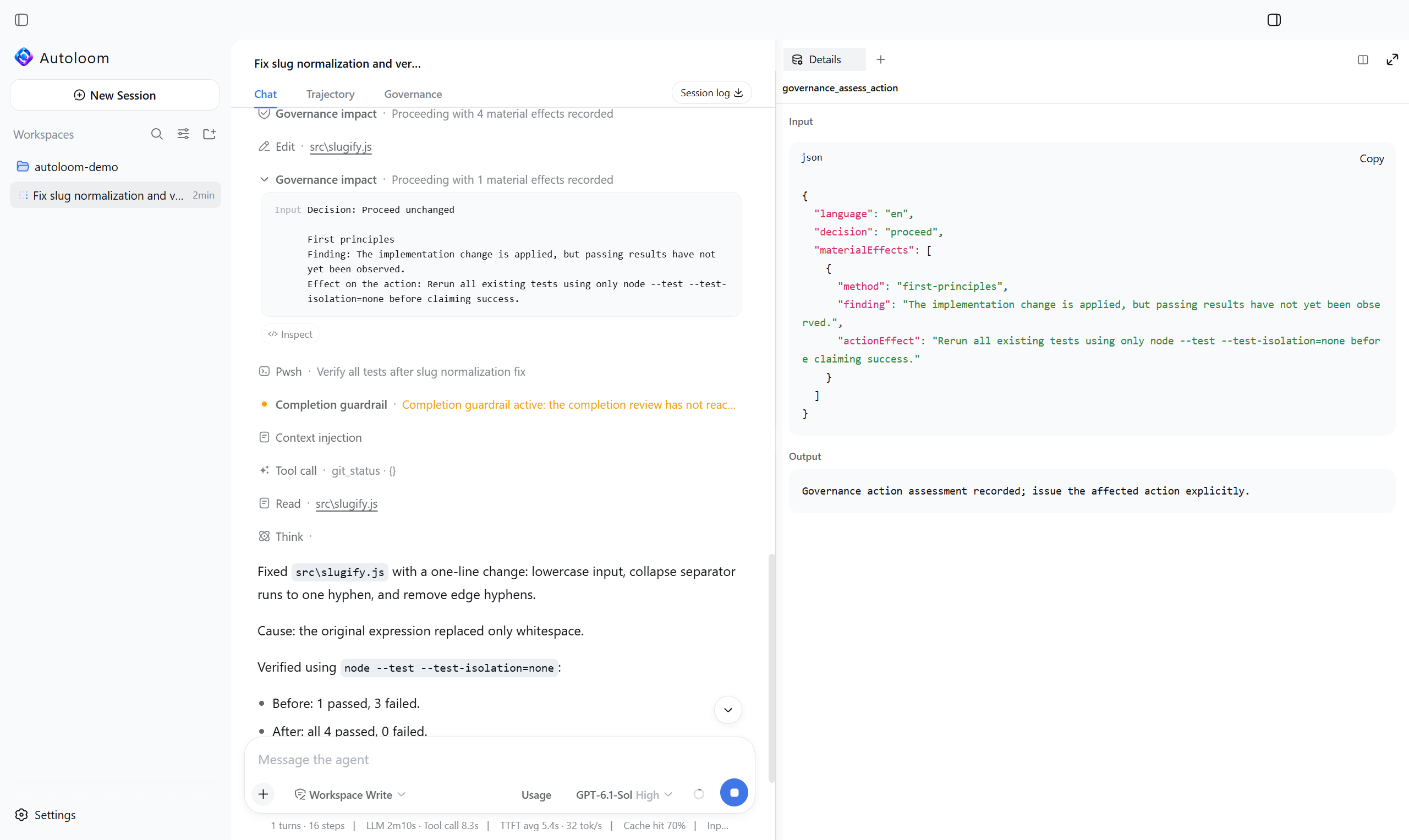
 40-second real task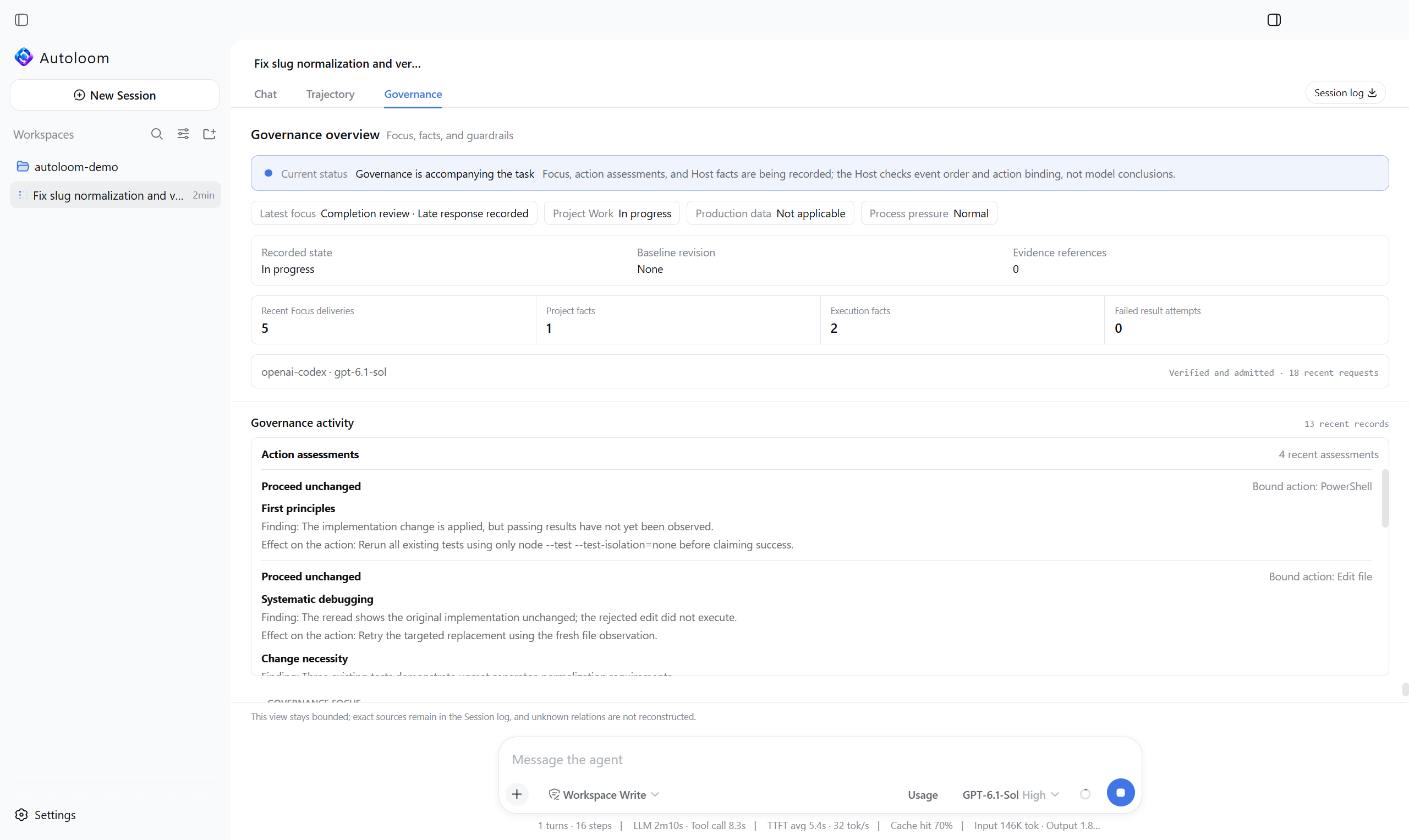
Governance Engineering
Governance is not a report generated after the task. It participates before action, changes the next step during execution, and leaves reviewable facts and unknowns at delivery.
Goals, constraints, acceptance
Findings, methods, impact
Change operations and checkpoints
Execution facts, results, unknowns
A governance judgment must affect the next step, not only produce prose.
Move from a result back to judgments, tool calls, and source facts.
Separate confirmed facts, inferences, and unresolved unknowns.
Rules become part of how the Agent works instead of sitting outside the workflow.
Finding: the change is complete, but there is no actual post-change test result.
Action effect: run the existing tests and use their output to decide whether the issue is fixed.
Avoid changing code for its own sake.
Make the next step answer the observed cause.
Limit unrelated changes and duplicate owners.
Separate what ran from what it established.
Aegis × Autoloom
Add a standalone method pack to an existing Coding Agent, or use Autoloom with governance checkpoints, trajectory, and records integrated into execution.
Install governance methods in Coding Agent hosts that support Skills.
Combines methods, execution checkpoints, full trajectory, and governance records in a Windows product.
Both follow the same Governance Engineering direction while keeping product, installation, and release ownership clear.
These facts enter the Session record, connecting the result back to the original execution.
Scope, acceptance, relevant sources
Finding, method, action effect
Tools, command results, file observations
Result, evidence references, unknowns
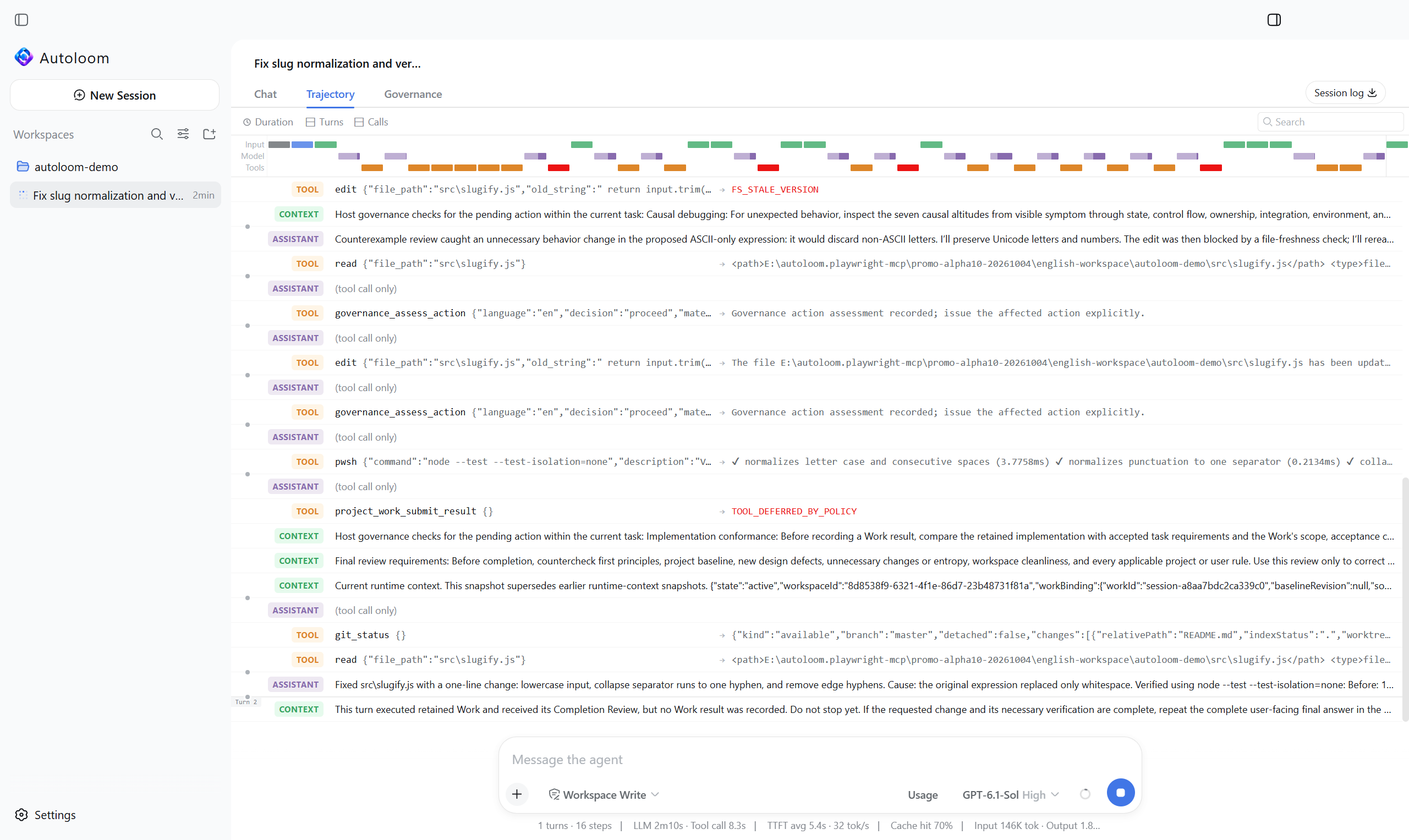
Inspect context, model output, tool calls, arguments, results, and timing by turn.
Move from the overview into action assessments, checkpoints, execution facts, and work results.
Governance impact → Checkpoint → Execution facts → Result record
The record supports review; it is not a guarantee that the task is correct.
The client is free. Your selected provider charges for model usage.
Governance enters only at relevant decision points and reuses the same Agent and Session. Actual cost depends on the task, model, and checks.
No. It records grounds, execution facts, and unknowns. It does not replace user acceptance or guarantee correctness.
The workspace stays on your computer or connected SSH host. Model requests may send relevant context to the selected provider, depending on the task and configuration.
Permission mode determines what the Agent may read, change, or execute. Actions that need confirmation ask before execution.